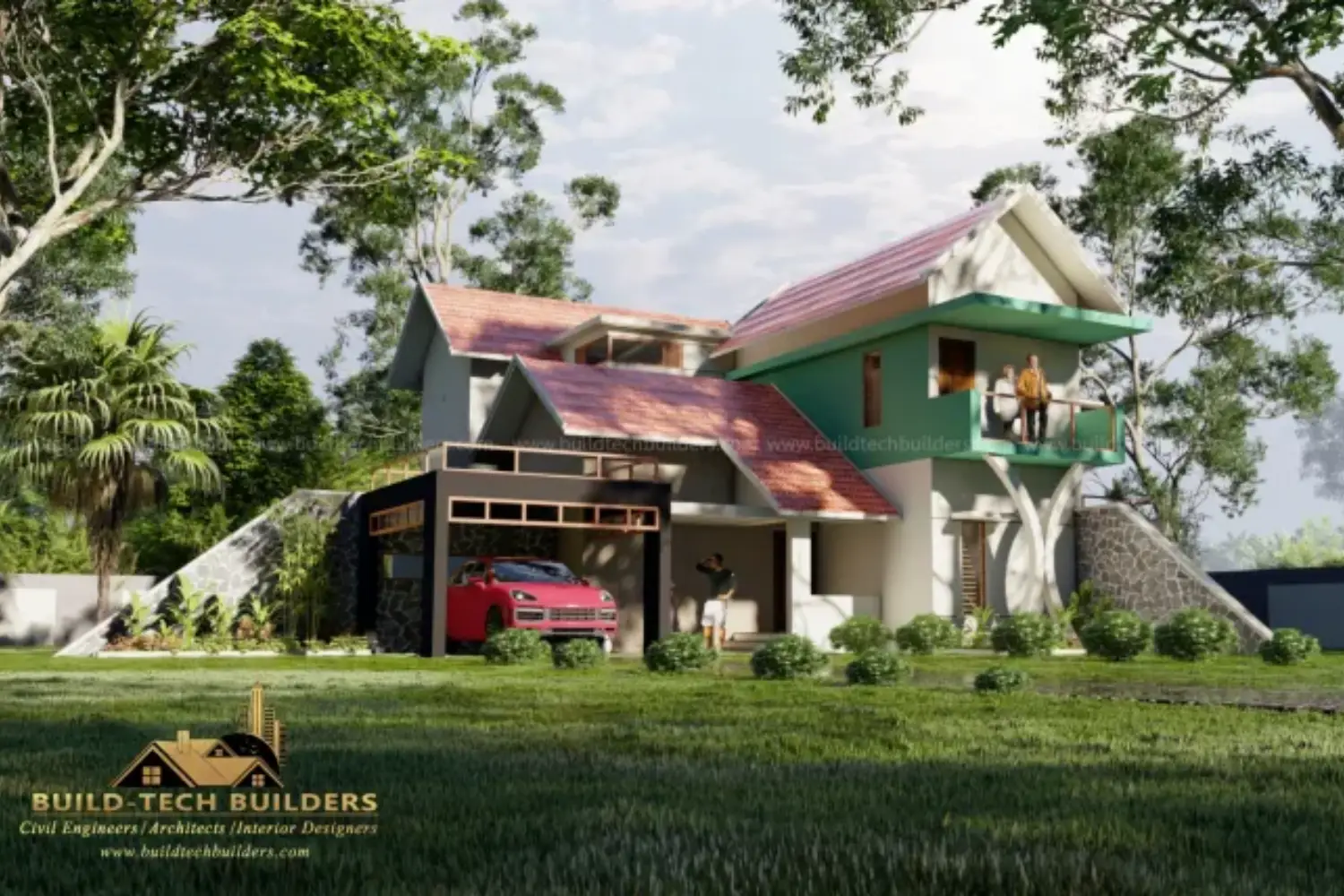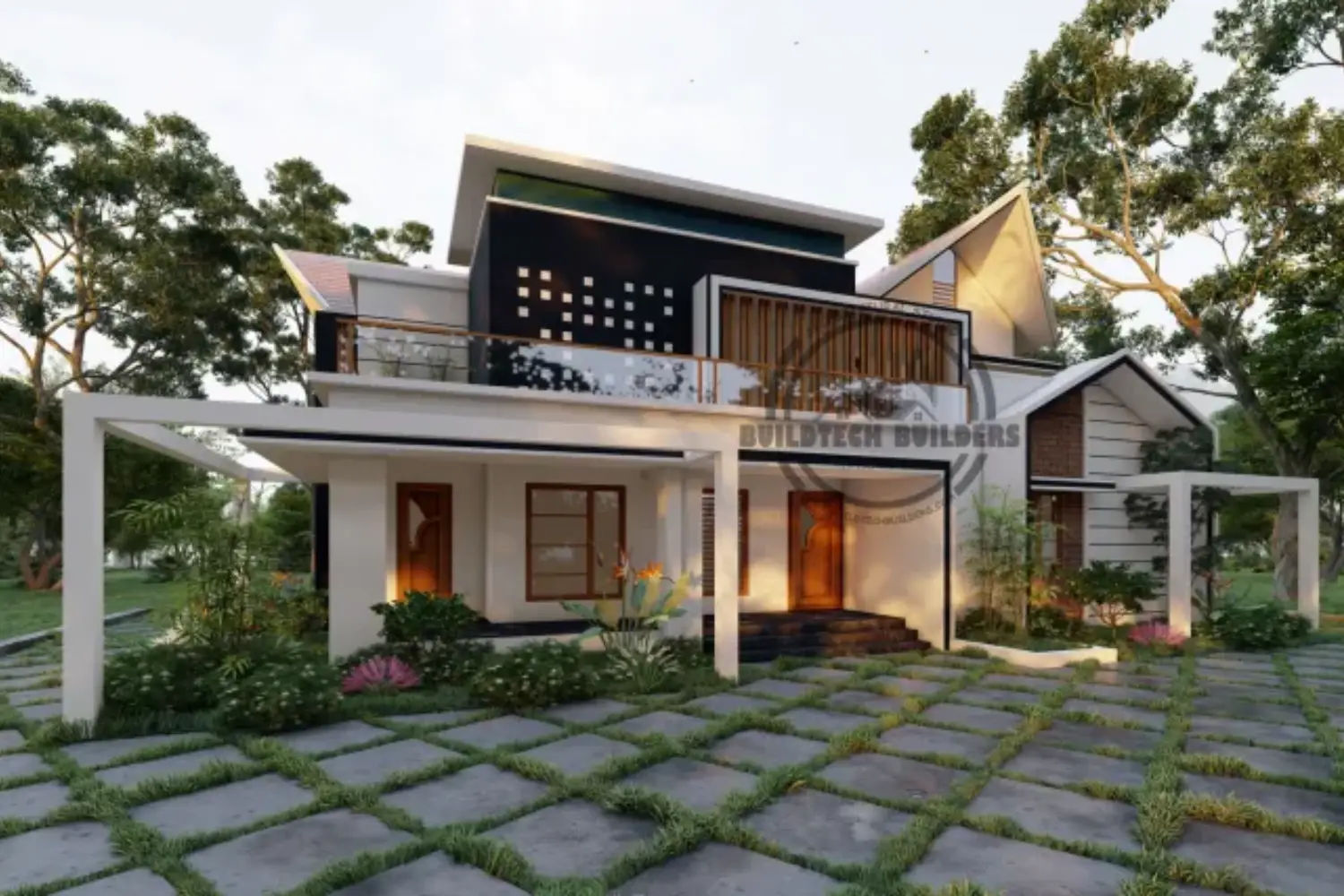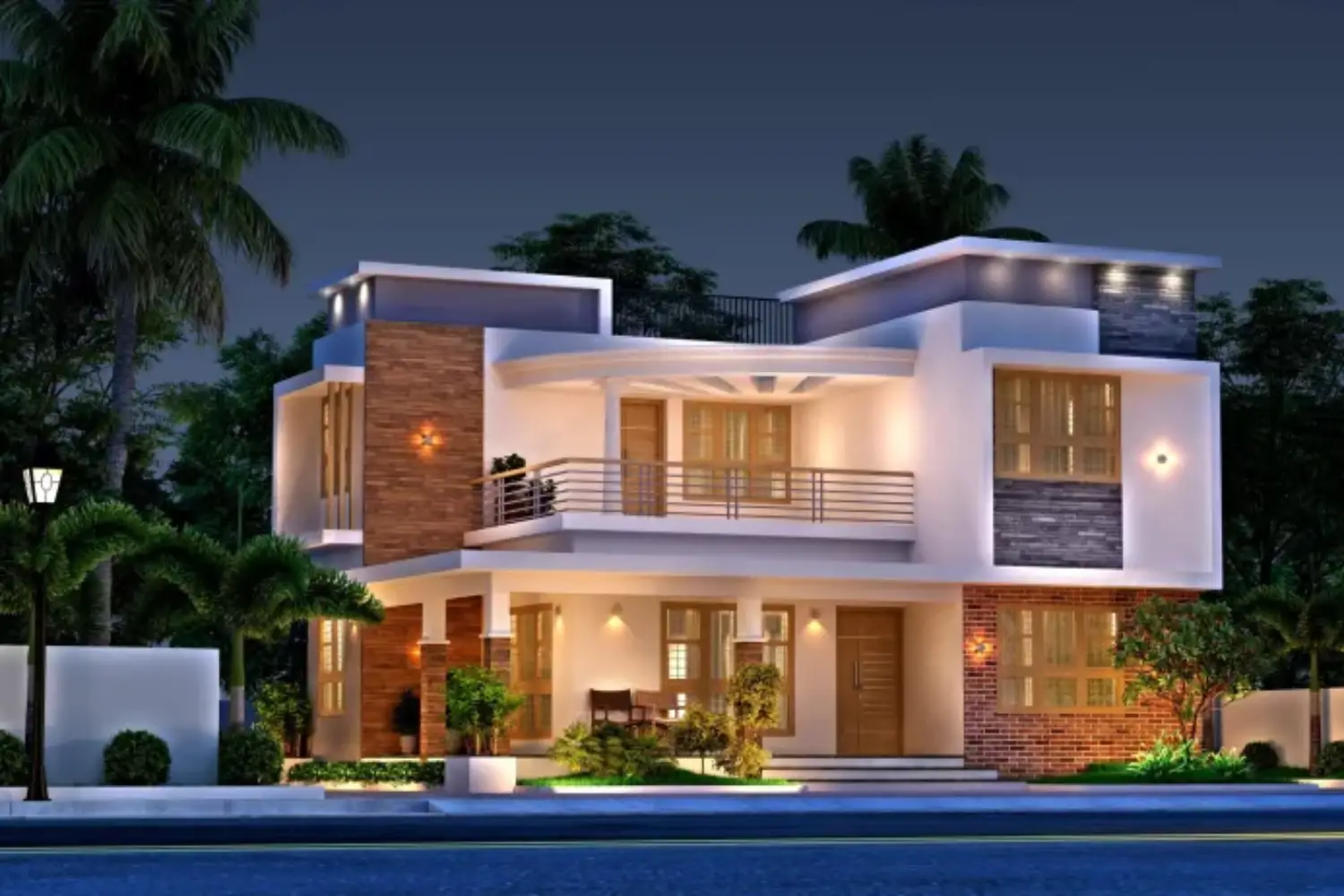
Choosing the right roofing material is important when building a house in Kerala. Your roof protects your home from heavy rain, strong winds, and hot weather. Therefore, choose a material that can withstand Kerala’s climate. Selecting suitable roofing materials can improve durability, indoor comfort, and long-term maintenance. Choosing suitable roofing materials is an important part of sustainable construction. Read our guide on Eco-Friendly House Construction in Kerala to learn more about sustainable materials and energy-efficient house design.
When comparing the best roofing materials for Kerala homes, homeowners should consider more than just the initial cost. Factors such as weather resistance, heat insulation, waterproofing, durability, appearance, and maintenance requirements are equally important.
Traditional Kerala homes commonly feature sloping roofs with clay tiles, while modern houses may use concrete roofs, metal roofing sheets, or a combination of different roofing systems. Each material has its own advantages and limitations.
In this guide, we explain the different roofing materials suitable for Kerala homes, their costs, durability, weather resistance, and important factors to consider before choosing the right roof for your dream home.
Why Roofing Material Selection Is Important in Kerala
Kerala receives heavy rainfall during the monsoon season. High humidity can also affect roofing materials. Therefore, homeowners should select materials that offer good weather resistance. Proper roof installation and drainage are equally important. Homeowners should select roofing materials carefully.
A properly designed roof should provide:
Protection against heavy rainfall.
Effective rainwater drainage.
Resistance to moisture and weather damage.
Suitable thermal comfort.
Structural safety.
Long-term durability.
Easy maintenance.
Protection against roof leakage.
The roofing material alone does not determine roof performance. Roof slope, waterproofing, installation quality, insulation, drainage, and maintenance are equally important.
Types of Roofing Materials for Kerala Homes
Several roofing materials are commonly used in Kerala residential construction. The most suitable option depends on the roof design, budget, appearance, and construction requirements. Homeowners should inspect the roof regularly.
1. Clay Roof Tiles
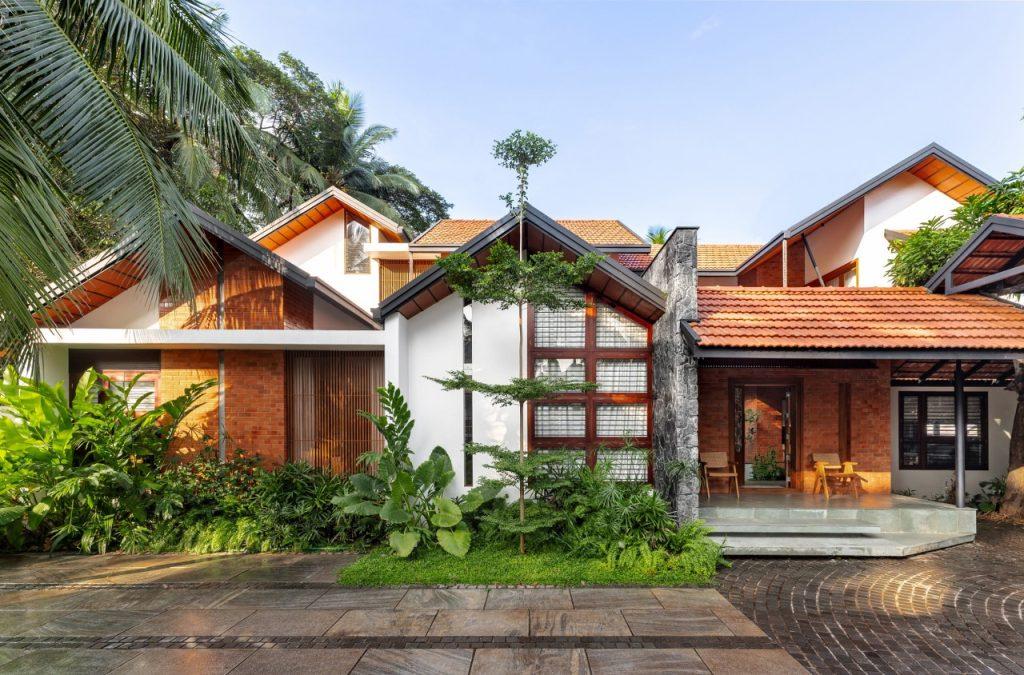
Kerala: Quarantine time would pass like a breeze inside this home | Architectural Digest Indiaarchitecturaldigest.in
Clay roof tiles are among the most popular roofing materials for traditional Kerala houses. They are made from natural clay and fired to produce durable roofing units.
Mangalore-pattern tiles are widely associated with Kerala architecture because of their appearance and suitability for sloping roofs.
Advantages of Clay Roof Tiles
Traditional and attractive appearance.
Good thermal comfort when installed over a properly ventilated roof.
Suitable for sloping roof designs.
Individual damaged tiles can often be replaced.
Available in different shapes and profiles.
Natural material with potential for reuse or recycling.
Disadvantages of Clay Roof Tiles
Require a suitable supporting structure because of their weight.
Individual tiles can crack or break due to impact.
Require correct overlapping and installation.
Periodic inspection and cleaning are necessary.
Moss and algae may develop in damp or shaded areas.
Weather Resistance
Clay tiles can perform well during Kerala’s monsoon when the roof has an appropriate slope, correct tile overlap, properly fixed ridge elements, and effective drainage.
Best Suitable For
Traditional Kerala homes, heritage-inspired houses, and modern homes with sloping tiled roofs.
2. Concrete Roof Tiles
Concrete roof tiles are manufactured using cement, aggregates, and other suitable ingredients. They are available in different colours, shapes, and profiles.
These tiles can be used in traditional and contemporary residential designs.
Advantages of Concrete Roof Tiles
Available in different profiles and colours.
Consistent shapes and dimensions.
Suitable for many sloping roof designs.
Can provide good durability when manufactured and installed properly.
Often available in modern architectural styles.
Disadvantages of Concrete Roof Tiles
Relatively heavy.
Require suitable structural support.
Surface appearance may change with ageing.
Can develop moss or algae in damp conditions.
Broken tiles may require replacement.
Weather Resistance
Concrete tiles can provide reliable protection against rainfall when installed correctly. Their performance depends on tile quality, roof slope, overlap, and drainage.
Best Suitable For
Homeowners looking for a tiled roof with different design and colour options.
3. Reinforced Cement Concrete (RCC) Roof
RCC roofing is commonly used in modern residential construction. It provides a solid roof slab that can also function as a terrace when appropriately designed.
Advantages of RCC Roofing
Strong structural roofing system when properly engineered.
Suitable for flat or terrace-style architectural designs.
Can accommodate rooftop installations when structurally designed for them.
Provides a solid surface for waterproofing systems.
Can be combined with roof insulation or protective coverings.
Disadvantages of RCC Roofing
Requires proper structural design and reinforcement.
Waterproofing is essential.
Poor drainage can cause water stagnation.
Cracks or waterproofing failures may lead to leakage.
The roof can become hot without suitable insulation or shading.
Weather Resistance
RCC roofs can perform well in Kerala when designed with suitable slope, drainage outlets, waterproofing, and maintenance provisions.
Best Suitable For
Modern houses, flat-roof designs, terrace homes, and buildings requiring usable roof space.
4. Metal Roofing Sheets
Metal roofing sheets are used in residential buildings, extensions, car sheds, verandas, and other roof applications.
Common options include colour-coated steel sheets, aluminium sheets, and other coated metal roofing products.
Advantages of Metal Roofing
Lightweight compared with many tiled roofing systems.
Quick installation when properly planned.
Suitable for sloping roofs.
Effective rainwater runoff with appropriate roof profiles.
Available in different colours and designs.
Can be used for large roof spans with suitable structural support.
Disadvantages of Metal Roofing
Can become hot without insulation or ventilation.
Rain noise may be noticeable.
Coatings can deteriorate if damaged or poorly maintained.
Corrosion resistance depends on the metal, coating, fasteners, and environment.
Requires careful detailing at joints and roof edges.
Weather Resistance
Metal roofing can provide effective protection against heavy rainfall when installed with correct overlaps, fasteners, flashing, and drainage details.
For coastal areas of Kerala, corrosion-resistant materials and suitable fasteners are particularly important.
Best Suitable For
Modern sloping roofs, lightweight roofing structures, car sheds, verandas, and selected residential applications.
5. Fibre Cement Roofing Sheets
Fibre cement roofing sheets are manufactured using cement and reinforcing fibres. Asbestos-free products are available for roofing applications.
Advantages of Fibre Cement Roofing
Relatively lightweight.
Simple installation.
Suitable for utility buildings and covered spaces.
Available in different sheet profiles.
Can be economical for certain applications.
Disadvantages of Fibre Cement Roofing
Can become brittle with ageing or impact.
Requires appropriate supporting structures.
Heat comfort depends on roof assembly.
Damaged sheets require careful replacement.
Weather Resistance
Fibre cement sheets can resist normal weather exposure when properly installed. Correct fixing, sheet overlap, and drainage are important during heavy rainfall.
Best Suitable For
Utility spaces, covered outdoor areas, selected budget roofing applications, and secondary structures.
6. Polycarbonate Roofing
Polycarbonate roofing is a translucent roofing material that allows natural light to enter covered spaces.
It is commonly used for verandas, car parking areas, pergolas, and selected outdoor roofing applications.
Advantages of Polycarbonate Roofing
Allows natural daylight.
Lightweight.
Available in transparent and tinted options.
Suitable for modern architectural designs.
Useful for covered outdoor spaces.
Disadvantages of Polycarbonate Roofing
Can increase heat under direct sunlight.
Requires suitable UV protection.
Can be damaged if improperly installed.
Expansion and contraction must be considered.
Not generally the preferred choice for the entire main house roof.
Weather Resistance
Polycarbonate roofing can handle rainfall when installed with correct support, expansion allowances, drainage, and suitable sheet profiles.
Best Suitable For
Car sheds, verandas, skylights, pergolas, and other spaces where natural light is desired.
7. Ceramic and Glazed Roofing Tiles
A Clay Roof Tiled Kerala House That Harmonizes Tradition with Modern Luxury [Video]home-designing.com
Ceramic and glazed roofing tiles offer a decorative roofing option for modern and premium residential homes.
They are available in different colours, finishes, and profiles.
Advantages
Attractive architectural appearance.
Wide range of colours and finishes.
Suitable for contemporary and traditional designs.
Good durability when quality products are used.
Some finishes may offer reduced surface water absorption.
Disadvantages
Can be more expensive than basic roofing tiles.
Installation requires skilled workmanship.
Some products may be vulnerable to impact.
Replacement tiles must match the original profile and colour.
Weather Resistance
Ceramic roofing tiles can provide good weather protection when installed according to the manufacturer’s requirements and with suitable roof slope and drainage.
Best Suitable For
Premium villas, contemporary Kerala homes, and decorative sloping roof designs.
Best Roofing Materials for Kerala Homes: Comparison Table
The following table provides a general comparison of roofing options.
| Roofing Material | Durability | Heat Comfort | Rain Protection | Maintenance |
|---|---|---|---|---|
| Clay Tiles | High | Good | Good with correct installation | Moderate |
| Concrete Tiles | High | Good with suitable roof assembly | Good | Moderate |
| RCC Roof | High structural durability | Needs insulation or shading | Depends on waterproofing | Moderate to high |
| Metal Roofing | Good with suitable coatings | Needs insulation | Good with correct installation | Low to moderate |
| Fibre Cement | Moderate | Depends on assembly | Good with proper installation | Moderate |
| Polycarbonate | Moderate | Can increase heat | Suitable for selected applications | Moderate |
| Ceramic Tiles | High with quality products | Good with suitable assembly | Good | Low to moderate |
These are general comparisons, not guaranteed product ratings. Actual performance depends on product specifications, installation quality, roof design, and maintenance.
Roofing Material Cost in Kerala
Roofing cost depends on the material, roof area, structural framework, installation labour, insulation, waterproofing, transportation, and finishing requirements.
| Roofing Material | General Cost Level |
|---|---|
| Clay Tiles | Low to Medium |
| Concrete Tiles | Medium |
| RCC Roofing | High |
| Metal Roofing Sheets | Low to Medium |
| Fibre Cement Sheets | Low |
| Polycarbonate Sheets | Medium |
| Ceramic Roofing Tiles | Medium to High |
What Determines Roofing Cost?
The total roofing cost is influenced by:
Roof area and design complexity.
Material brand and quality.
Supporting structure.
Roof slope.
Installation labour.
Waterproofing requirements.
Insulation requirements.
Gutters and rainwater drainage.
Transportation and wastage.
Maintenance provisions.
For an accurate estimate, request a quotation that includes both materials and installation.
Avoid comparing roofing materials only by their purchase price. Compare the complete installed roofing system and its expected maintenance requirements.
Which Roofing Material Is Best for Heavy Rainfall in Kerala?
Kerala’s monsoon conditions require proper roofing design and installation. Builders should provide waterproofing for RCC roofs.
For sloping roofs, clay tiles and suitable metal roofing systems can provide effective rainfall protection when correctly installed.
For flat RCC roofs, waterproofing, drainage slope, and properly designed outlets are essential.
Important roofing considerations include:
Correct roof slope.
Adequate tile or sheet overlap.
Proper ridge and valley detailing.
Suitable gutters and downpipes.
Waterproofing at joints.
Corrosion-resistant fasteners where needed.
Regular inspection before the monsoon.
Roofing professionals should ensure that the selected system meets the structural and weather requirements of the building.
How to Choose the Right Roofing Material for Your Kerala Home
Selecting the right roofing material requires careful consideration of your house design, budget, and environmental conditions.
1. Consider Your House Architecture
Traditional Kerala houses often look attractive with clay roof tiles, while modern houses may use RCC roofs, metal roofing, or contemporary tiled roofing.
2. Evaluate Your Budget
Compare the complete roofing cost, including supporting structures, labour, waterproofing, insulation, and maintenance.
3. Check Weather Resistance
Choose a roofing system suitable for heavy rainfall, humidity, and local wind conditions.
4. Consider Indoor Temperature
Roof insulation, ventilation, shading, and roof colour can influence indoor comfort.
5. Understand Maintenance Requirements
Consider how easily damaged tiles or sheets can be replaced and whether the roof requires regular inspection or protective treatments.
6. Consult Construction Professionals
Architects and structural engineers can help select a roofing system that suits your building design and structural requirements.
Common Roofing Mistakes to Avoid
Many roofing problems occur because of poor planning or installation.
Avoid these common mistakes:
Choosing roofing material only because it is cheap.
Ignoring roof slope requirements.
Using poor-quality waterproofing.
Not providing sufficient drainage.
Ignoring roof insulation.
Using unsuitable fasteners.
Neglecting flashing and roof joints.
Installing roofing materials without structural assessment.
Ignoring regular roof maintenance.
Failing to inspect the roof before monsoon.
A well-designed roofing system can help reduce leakage problems and improve the long-term performance of your house.
Frequently Asked Questions (FAQs)
1. Which roofing material is best for Kerala homes?
Clay tiles are a popular choice for traditional sloping Kerala roofs. RCC roofing is common in modern homes, while metal roofing can be suitable for lightweight sloping roof systems. The best choice depends on the architectural design, budget, climate conditions, and maintenance requirements.
2. Are clay roof tiles suitable for Kerala’s heavy rainfall?
Yes. Clay tiles can perform well during heavy rainfall when installed with suitable roof slope, correct overlap, proper ridge detailing, and effective drainage.
3. Is metal roofing suitable for Kerala homes?
Metal roofing can be suitable for Kerala homes when the material has appropriate corrosion protection and the roof includes suitable insulation, ventilation, and rainwater drainage.
4. Which roofing material is more economical?
The most economical option depends on the roof design and total installed cost. Metal sheets and fibre cement can have lower initial material costs in some applications, while clay tiles and RCC roofs may offer different long-term benefits.
5. Does an RCC roof require waterproofing?
Yes. RCC roofs require suitable waterproofing and drainage provisions to reduce the risk of leakage. Waterproofing systems should be selected according to the roof condition and project requirements.
6. How can I reduce heat inside my house through roofing?
You can improve roof heat performance through suitable insulation, ventilation, reflective roof finishes, shading, and appropriate roof design.
7. How often should a Kerala house roof be inspected?
Inspect your roof periodically, especially before and after the monsoon. Check for damaged tiles, loose sheets, blocked gutters, deteriorated waterproofing, and visible leakage.
Conclusion
Choosing the best roofing materials for Kerala homes requires careful consideration of cost, durability, weather resistance, and architectural style.
Clay tiles remain a popular option for traditional Kerala houses, while RCC roofing is widely used in modern residential construction. Metal roofing, concrete tiles, fibre cement, polycarbonate, and ceramic tiles can also be suitable for specific applications.
The most important factor is selecting a roofing system that matches your house design, structural requirements, local climate, and maintenance expectations.
Before beginning construction, consult qualified architects, engineers, and roofing professionals to compare materials and develop a suitable roofing plan.
A properly designed and maintained roof can protect your home from Kerala’s monsoon conditions while improving comfort, durability, and long-term performance.