
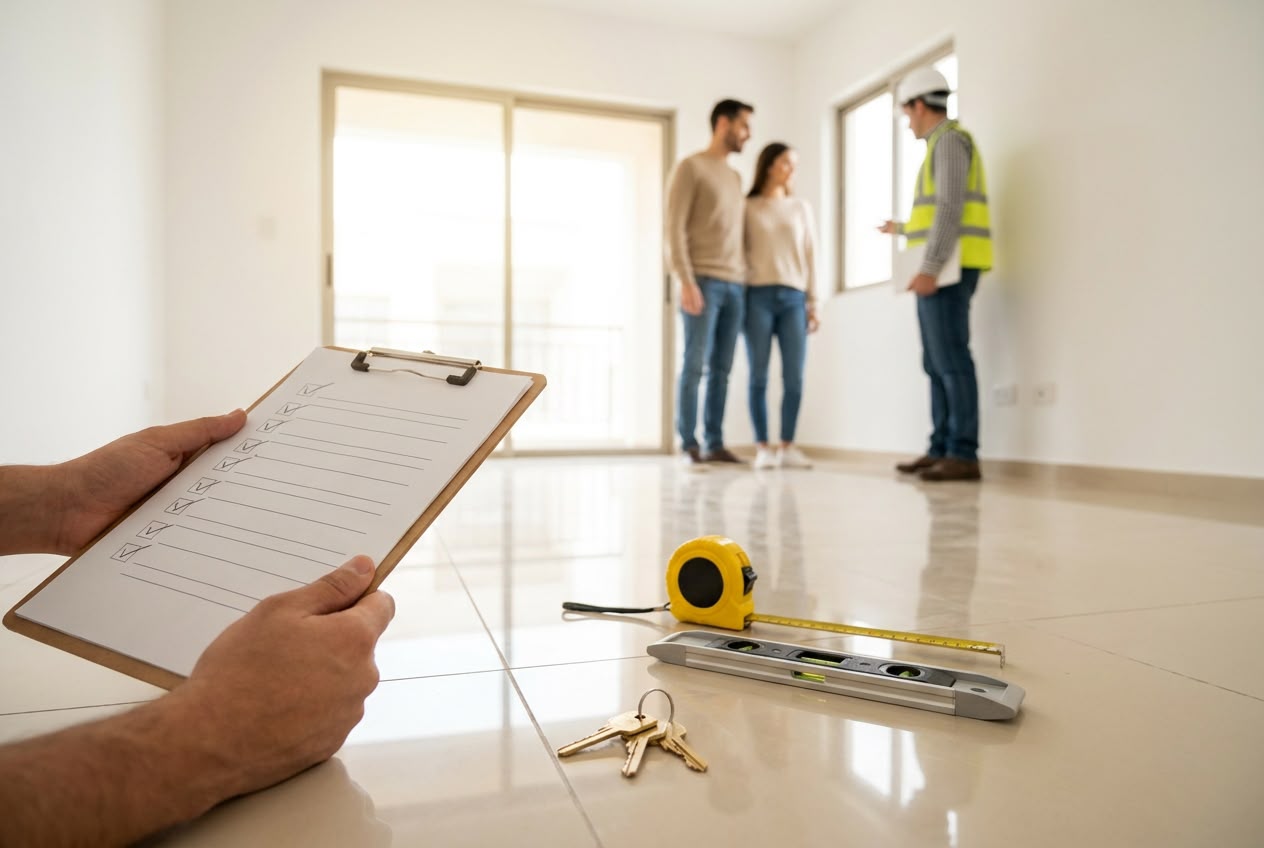
Taking possession of a newly constructed house is an exciting moment. After months of planning and construction, you are finally ready to move into your new home. However, before accepting the keys, it is important to inspect the property carefully.
A proper house handover checklist helps you identify incomplete work, construction defects and safety issues before moving in. It also gives you an opportunity to discuss repairs with your builder and ensure that important documents are handed over.
In this guide, we explain what to inspect before taking possession of your new house in Kerala.
Why Is a House Handover Inspection Important?
A final inspection helps confirm whether the house is completed according to the agreed plans and specifications. It can also reveal small problems that may become expensive to repair later.
For example, a leaking tap, damaged tile or faulty electrical switch may seem minor. However, checking these issues before handover makes it easier to record them and request corrections.
Therefore, take enough time for the inspection. Do not rush through the process just because the construction work appears complete.
1. Inspect the Walls, Floors and Ceilings
Start by checking the overall condition of the house. Look closely at the walls, floors and ceilings in every room.
Check for:
- Cracks in walls, ceilings or floor surfaces
- Damp patches, water stains or signs of leakage
- Uneven plastering or poorly finished paint
- Loose, hollow or broken floor tiles
- Gaps around doors, windows and wall corners
- Incomplete painting or finishing work
Pay special attention to bathrooms, kitchens, balconies and other areas exposed to water. If you notice major cracks or signs of structural damage, ask a qualified engineer to inspect them.
2. Check Doors, Windows and Locks
Doors and windows should open and close smoothly. Check that all locks, handles and hinges work properly.
During the inspection:
- Open and close every door and window.
- Check whether the locks work correctly.
- Look for gaps that may allow rainwater or dust inside.
- Inspect glass panels for cracks or damage.
- Check window frames and door edges for poor finishing.
- Confirm that mosquito mesh and other agreed fittings are installed.
Also, check the main entrance door carefully because it is an important part of your home’s security.
3. Test the Electrical System
Electrical safety is one of the most important parts of a house handover inspection. Test the switches, lights, fans and sockets in every room.
Make sure to check:
- All lights and fans are working.
- Switches and plug points are installed in the agreed locations.
- The distribution board and circuit breakers are properly labelled.
- The earthing and electrical safety arrangements have been checked by a qualified electrician.
- Outdoor lights and power points are functioning, where provided.
Do not open electrical panels or handle exposed wires yourself. Ask a qualified electrician to check any suspected electrical problem.
4. Inspect Plumbing and Water Supply
Water leakage can damage walls, floors and furniture. Therefore, test the plumbing system before accepting possession.
Check the following:
- Turn on every tap and check the water flow.
- Flush all toilets and check for proper operation.
- Inspect washbasins and kitchen sinks for leakage.
- Check bathroom fittings and shower connections.
- Look underneath sinks for dripping pipes.
- Confirm that floor drains are not blocked.
- Check the water tank, pump and water supply arrangements.
Allow water to run for a few minutes. This can help reveal leaks that may not appear immediately.
5. Check the Kitchen and Bathroom Finishing
Kitchens and bathrooms require extra attention because they contain several fittings and water connections.
In the kitchen, inspect the countertop, sink, storage units, wall tiles and plumbing connections. Check whether the cabinets and drawers open smoothly.
In the bathrooms, inspect the sanitary fittings, shower, taps, mirrors, accessories and floor drainage. Pour some water on the floor to check whether it flows towards the drain instead of collecting in corners.
Also, check the ventilation arrangements in these areas.
6. Inspect the Roof, Terrace and Outdoor Areas
Kerala receives heavy rainfall during the monsoon season. For this reason, roof and outdoor inspections are especially important.
Check:
- Roof and terrace surfaces for visible cracks or water stagnation.
- Waterproofing work and drainage outlets.
- Rainwater pipes and gutters for blockages.
- Balcony railings and staircase handrails.
- Exterior walls for dampness or unfinished painting.
- Compound walls, gates and entrance pathways.
- Outdoor drainage and rainwater flow around the house.
If possible, ask the builder about the waterproofing work completed and the warranty or maintenance information available.
7. Verify the House Plan and Agreed Specifications
Compare the completed house with the approved plan and the specifications agreed with your builder.
Check the location and size of rooms, doors, windows, electrical points, plumbing fittings and other agreed features. Also, confirm that the materials and fixtures match the agreed specifications.
If you notice any difference, discuss it with the builder and ask for an explanation. For significant changes, consult the relevant professional and check the applicable approvals.
8. Check Important Documents Before Taking Possession
Do not focus only on the physical condition of the house. Make sure you also receive the relevant documents.
Depending on the property and project, ask about:
- Approved building plan and relevant permit records
- Completion-related documents
- Occupancy Certificate, where applicable
- Final payment statement and receipts
- Warranty details for fittings, equipment and installations
- Electrical and plumbing information, where available
- Product manuals and maintenance instructions
- Keys, access cards and remote controls
9. Prepare a Defect or Snag List
A snag list is a written record of incomplete work, defects or items that need correction before or after handover.
For example, your list may include a loose bathroom fitting, a damaged tile, a window that does not lock properly or an unfinished paint area.
For each issue:
- Write a clear description of the problem.
- Take photographs or videos as evidence.
- Mention the exact room or location.
- Share the list with the builder.
- Agree on a repair plan and expected completion date.
- Keep a copy of the list and written communication.
Follow up to confirm that the agreed corrections have been completed.
10. Record Keys, Meter Readings and Final Details
Before completing the handover, record all items given to you and the property’s utility readings.
Make sure you receive:
- Main door and internal door keys
- Gate, garage and mailbox keys, if applicable
- Access cards and remote controls
- Electricity meter reading
- Water meter reading, if available
- Details of utility connections
- Builder and maintenance contact information
Keep these details in a safe place for future reference.
Common Mistakes to Avoid During House Handover
Even when a house looks beautiful, small problems can be overlooked during a rushed inspection.
Avoid these common mistakes:
- Accepting possession without inspecting every room.
- Ignoring small leaks, cracks or finishing defects.
- Not testing electrical switches and plumbing fittings.
- Failing to compare the house with the agreed specifications.
- Forgetting to collect important documents and warranties.
- Not recording meter readings and keys.
- Signing documents without reading their terms.
- Relying only on verbal promises about pending repairs.
Take your time and keep a written record of all important discussions.
How Can a Professional Builder Make Handover Easier?
A professional builder should maintain clear communication throughout the construction process and explain the work completed before handover.
A proper handover process includes a final walkthrough, inspection of important installations, documentation and discussion of any pending corrections. It also helps homeowners understand the maintenance requirements of their new property.
At Buildtech Builders, careful planning, quality checks and clear communication can help make the final handover process more organised and comfortable for homeowners.
Frequently Asked Questions
1. What should I check before taking possession of a new house?
Inspect the walls, floors, ceilings, doors, windows, electrical fittings, plumbing, bathrooms, kitchen, roof and outdoor areas. Also, check the relevant documents and agreed specifications.
2. What is a snag list in house construction?
A snag list is a written record of defects, incomplete work or finishing issues found during the final inspection of a property.
3. Should I inspect the house before accepting the keys?
Yes. A final walkthrough helps you identify visible defects and incomplete work. Record any issues and discuss the correction plan with your builder.
4. Which documents should I collect during house handover?
Depending on your property, collect relevant approved plans, permit and completion-related records, the Occupancy Certificate where applicable, payment receipts, warranties and equipment manuals.
5. How do I check for water leakage in a new house?
Run taps, flush toilets and inspect the areas below sinks. Check ceilings, walls and corners for damp patches. Also, observe whether water drains properly in bathrooms and balconies.
6. How can I check electrical work before handover?
Test switches, lights, fans and sockets. Ask a qualified electrician to check the distribution board, earthing and other electrical safety arrangements.
7. What should I do if I find defects during the inspection?
Take photographs, write down each issue and share the list with your builder. Request a written repair plan and keep a record of the agreed completion dates.
8. Why is roof inspection important in Kerala?
Heavy rainfall can reveal problems with waterproofing, roof drainage and terrace finishing. Inspect these areas carefully to reduce the risk of water leakage.
9. Should I receive warranties during house handover?
Ask for available warranties and product documents for fittings, equipment and installations. Keep them safely for future repairs or maintenance.
10. Can I take possession if some minor work is pending?
This depends on the nature of the pending work, your agreement and applicable requirements. Record all outstanding items in writing and clarify the completion plan before signing the handover documents.
Conclusion
Taking possession of a new house is an important milestone. However, a careful final inspection is necessary before accepting the keys. Check the walls, floors, doors, windows, electrical systems, plumbing, roof and outdoor areas. Also, verify the relevant documents and prepare a written snag list for any pending work.
Using this house handover checklist can help you identify problems early and make your move into your new home more confident and organised.